Clear, evidence-based research to help Ohioans understand the issues, evaluate claims, and make informed decisions.
Explore Fact Checks, Ground Truths, Explainers, and Executive Summaries—each grounded in documented sources and transparent research methods.

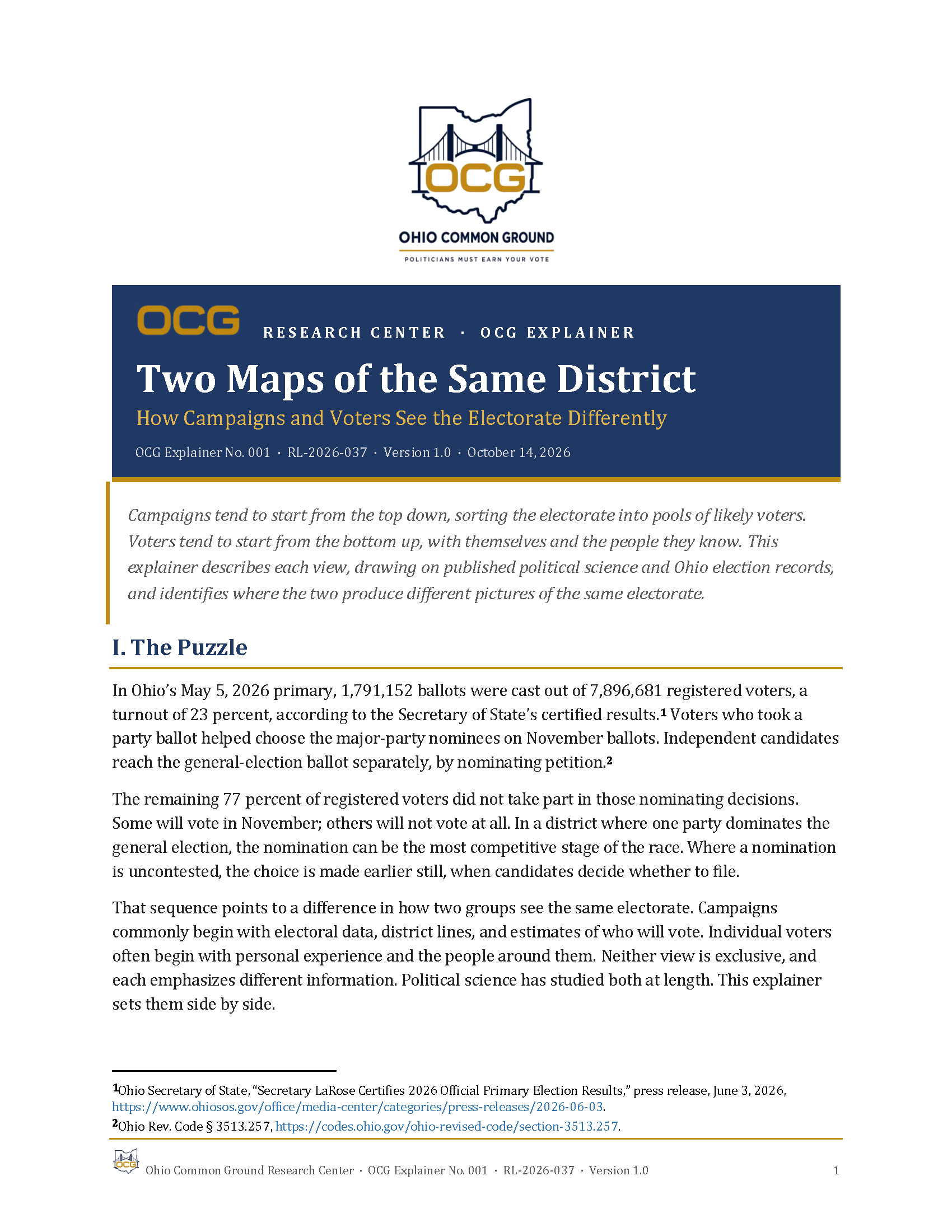
Campaigns tend to see the electorate from the top down, using voting histories, party affiliation, and turnout estimates. Voters often see politics from the bottom up, through personal experience and social relationships. Drawing on published political science and Ohio election records, this explainer examines how those perspectives differ, where they produce blind spots, and what those differences mean for political representation.
The OCG Research Center brings together visuals, explainers, learning paths, and long-form research to help Ohioans understand important issues from the facts up.
EXPLORE THE RESEARCH CENTER →
Campaigns tend to see the electorate from the top down, using voting histories, party affiliation, and turnout estimates. Voters often see politics from the bottom up, through personal experience and social relationships. Drawing on published political science and Ohio election records, this explainer examines how those perspectives differ, where they produce blind spots, and what those differences mean for political representation.

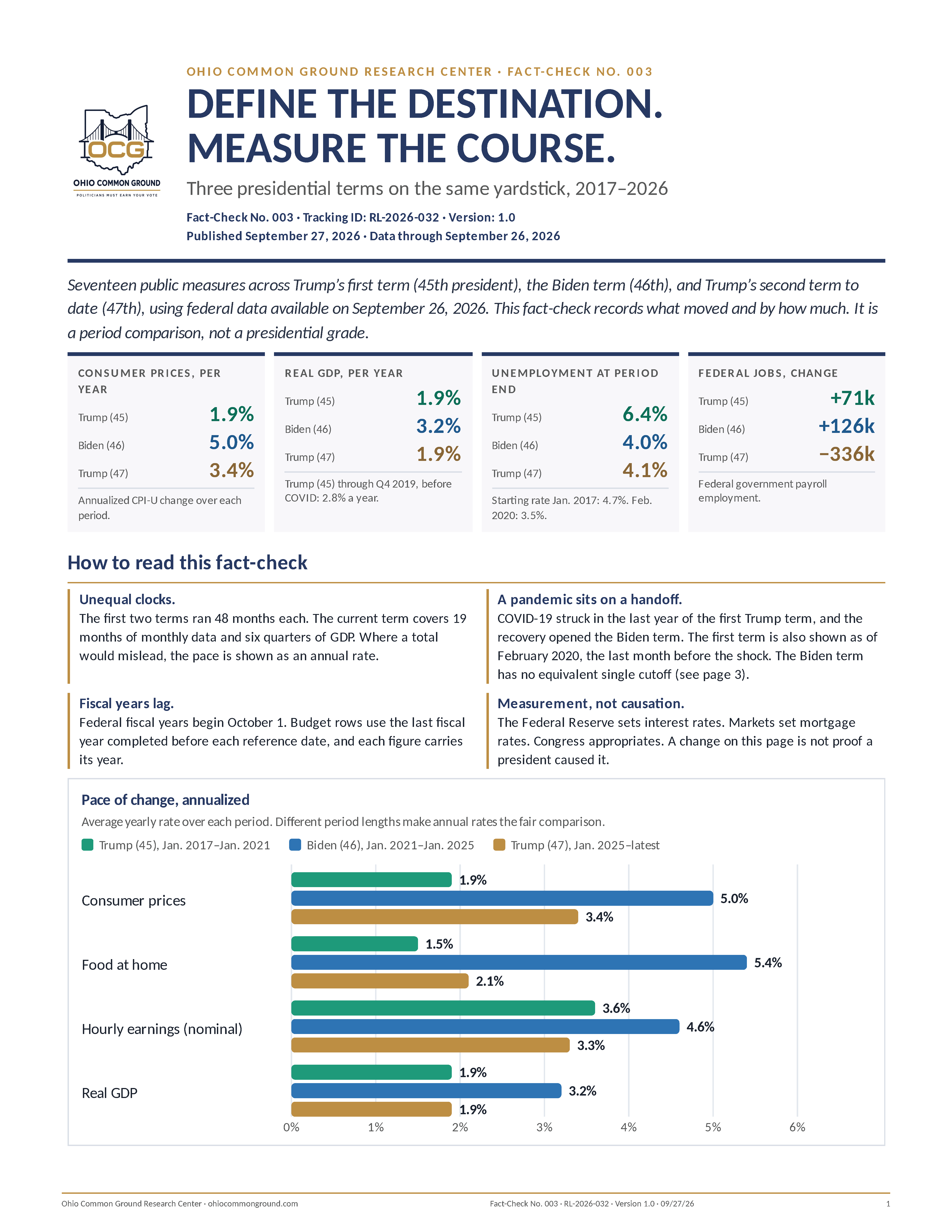
Three presidential terms, measured on the same yardstick. This fact-check compares 17 public measures across Trump’s first term, the Biden term, and Trump’s second term to date, using federal data available through September 26, 2026. It records what changed and by how much; it is a period comparison, not a presidential grade.
.png)
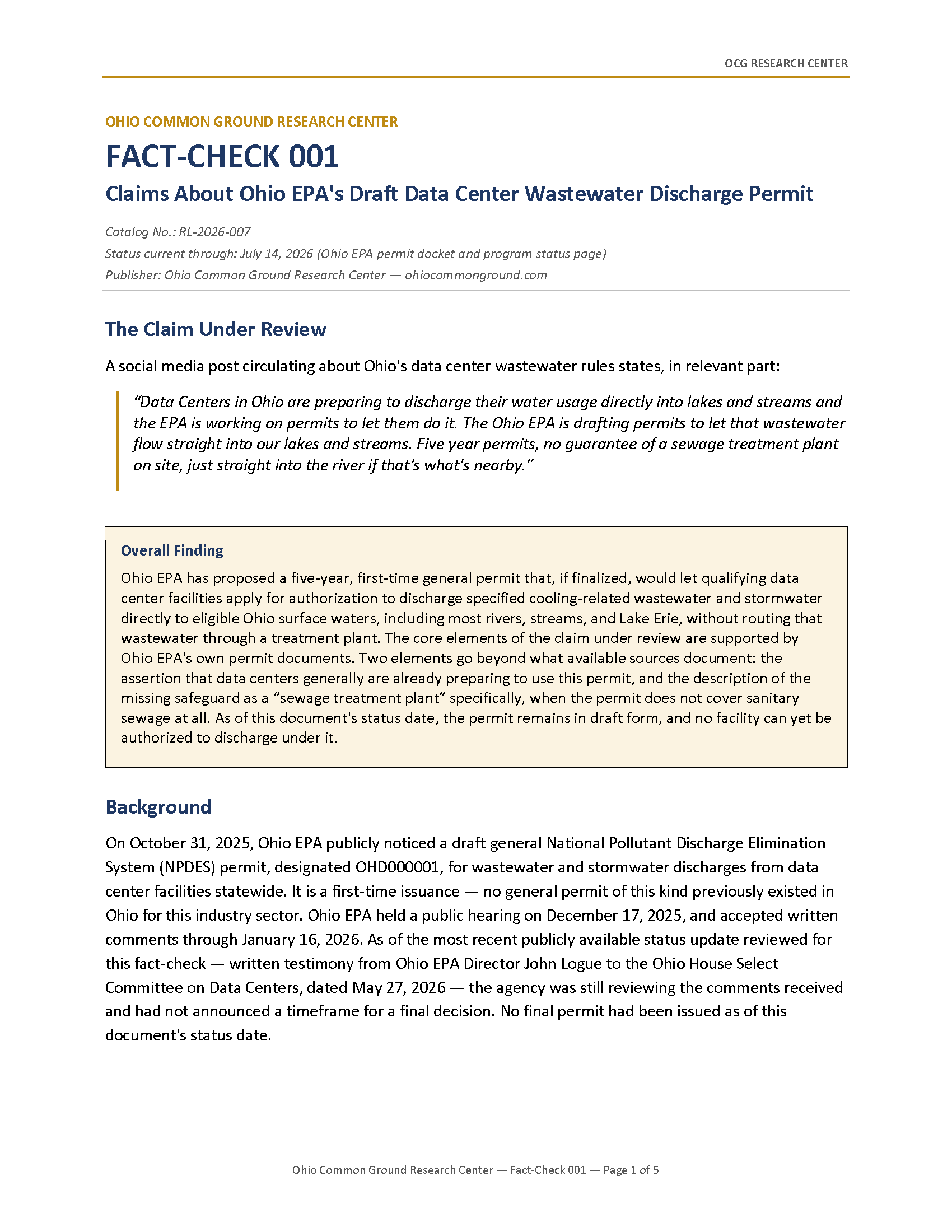
Ohio EPA has proposed a first-of-its-kind, five-year general permit that would let qualifying data centers apply to discharge specified cooling wastewater directly into eligible Ohio rivers, streams, and Lake Erie, without routing it through a treatment plant first. A viral claim describing this proposal circulated widely, and our fact-check found it mostly accurate: the draft permit is real, the five-year term is accurate, and residents' concerns about unregulated temperature limits and unaddressed chemicals like PFAS are borne out in the permit's own text. Two claims overstated the record, however — no specific data center has been confirmed to be "preparing" to use the permit, and the permit doesn't involve sanitary sewage at all, making "sewage treatment plant" an imprecise description of what's actually being regulated. As of this writing, the permit remains in draft form, with Ohio EPA still reviewing public comments and no timeline announced for a final decision.
Ohio Common Ground is committed to the highest levels of academic and analytical integrity.
Uses publicly available data and documented sources to ensure all findings are verifiable.
Sources and methodology are fully published alongside every paper for complete transparency.
Research focuses strictly on evidence and documented facts, free from partisan campaign styling.
A published correction policy with full version history ensures our research remains accurate.