Explore the Research Center
Research, data, and source-based analysis designed to help Ohioans understand issues before deciding what they think about them.
Issues
Explore research organized around the issues affecting Ohioans.
Officials
Research candidates and, as the library expands, Ohio elected officials.
Latest Research
The newest work from the Ohio Common Ground Research Center.

Ohio Issue 3: The Proposed Voter Photo Identification Constitutional Amendment
"Ohio Issue 3: The Proposed Voter Photo Identification Constitutional Amendment" • Ohio Issue 3, on the November 3, 2026 ballot, would enact a new Section 5 of Article V of the Ohio Constitution requiring photo identification to vote. This white paper examines what the amendment's text does, what it does not do, and what future legislation could and could not do under it. The paper's central finding, independently corroborated by the Legislative Service Commission's own analysis, is that Issue 3 primarily entrenches Ohio's existing statutory photo ID requirement (in place since 2023) into the Constitution, rather than creating new voter-facing rules; it sets a floor for absentee/mail voting that current practice already satisfies, without itself mandating photo ID by mail. The report also identifies unresolved interpretive questions — including whether new identification formats could be recognized by future ordinary statute or would require another constitutional amendment — and lays out, descriptively and without recommendation, drafting approaches to absentee-ballot security that the amendment's text did not adopt. Consistent with OCG Research Center standards, this report is descriptive rather than prescriptive and does not take a position on whether voters should approve or reject Issue 3.
Two Maps of the Same District
Campaigns tend to see the electorate from the top down, using voting histories, party affiliation, and turnout estimates. Voters often see politics from the bottom up, through personal experience and social relationships. Drawing on published political science and Ohio election records, this explainer examines how those perspectives differ, where they produce blind spots, and what those differences mean for political representation.
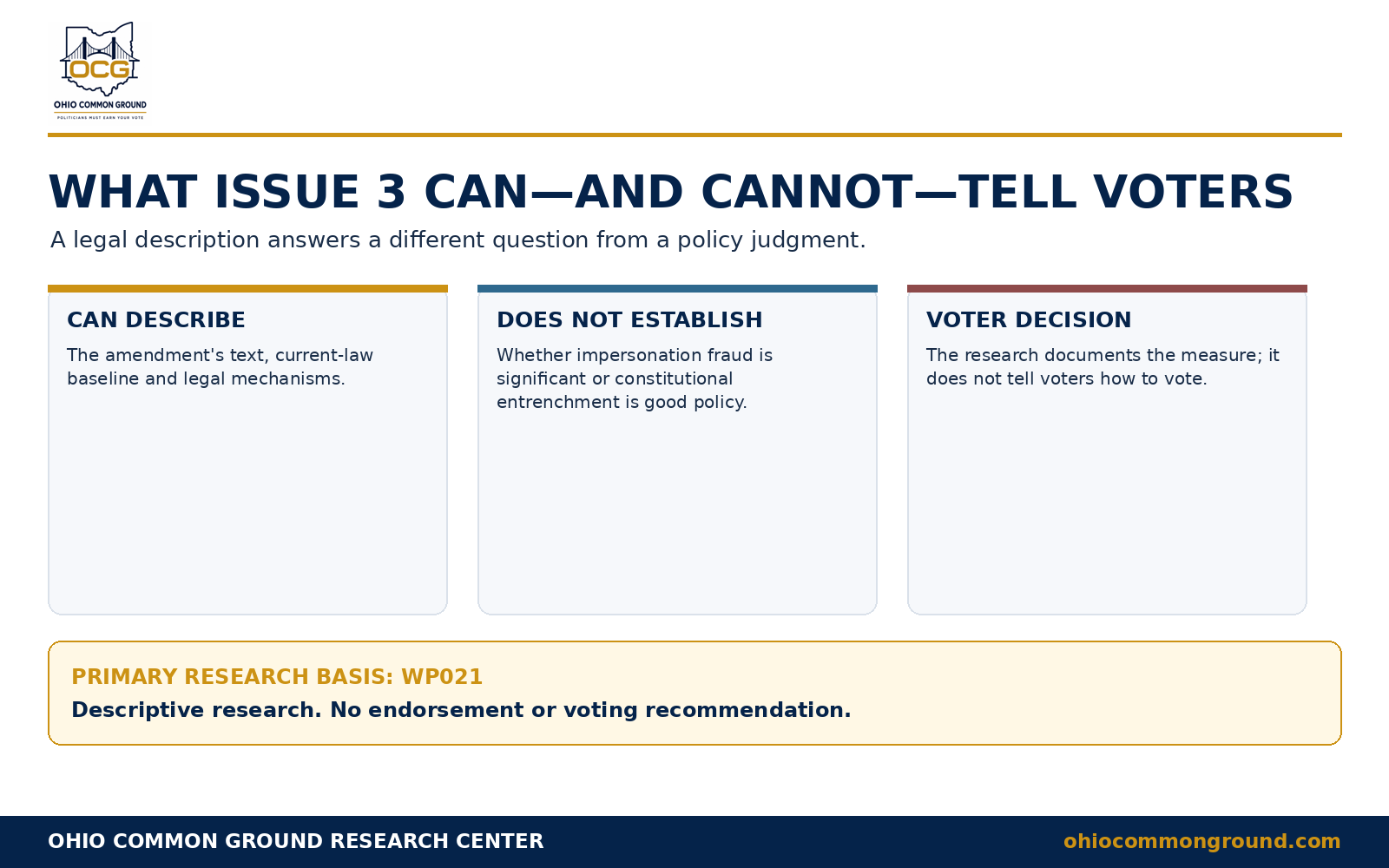
What Issue 3 Can—and Cannot—Tell Voters
WP021 separates what can be established from the amendment's text from policy questions the paper does not answer.