Ohio Property Taxes
How Ohio property taxes work, where the money goes, the role of school funding, reform options, and what abolition would require.
Property taxes touch nearly every Ohio community. They help finance public schools, counties, townships, municipalities and special districts, while also creating significant costs for homeowners, farms and businesses.
This collection examines the system before taking a position on it: how the tax works, who levies it, where the revenue goes, what alternatives exist, and what would have to happen if taxes on real property were abolished.
The objective is not to tell Ohioans whether property taxes should be kept, reformed or abolished. It is to make the choices and consequences easier to understand.
New to This Issue? Start Here.
Begin with a curated sequence of visuals designed to give you the foundation before you explore the issue in depth.
Ohio Property Taxes: Start Here
A curated path from how Ohio property taxes work to what abolition would – and would not – settle.
Start Learning Path →Go Deeper
Explore a specific part of this issue through a focused guided learning path.
Ohio Property Taxes: Governance & Decision-Making
A guided sequence explaining who values property, who proposes and approves levies, what happens after a levy passes, and how statewide property-tax changes can occur.
EXPLORE DEEP DIVE →Ohio Property Taxes: Funding Ohio Education
A guided sequence explaining where Ohio school funding comes from, how to compare funding measures, why district funding differs and how scholarship programs fit into the system.
EXPLORE DEEP DIVE →Ohio Property Taxes: Burden & Relief
A guided sequence explaining how Ohio property values translate into tax bills, what relief exists, who bears the burden and what reform tools can change it.
EXPLORE DEEP DIVE →Explore the Research
Browse OCG's charts, explainers, and data by subtopic. Select a Visual to see the explanation, sources, and verification behind it.
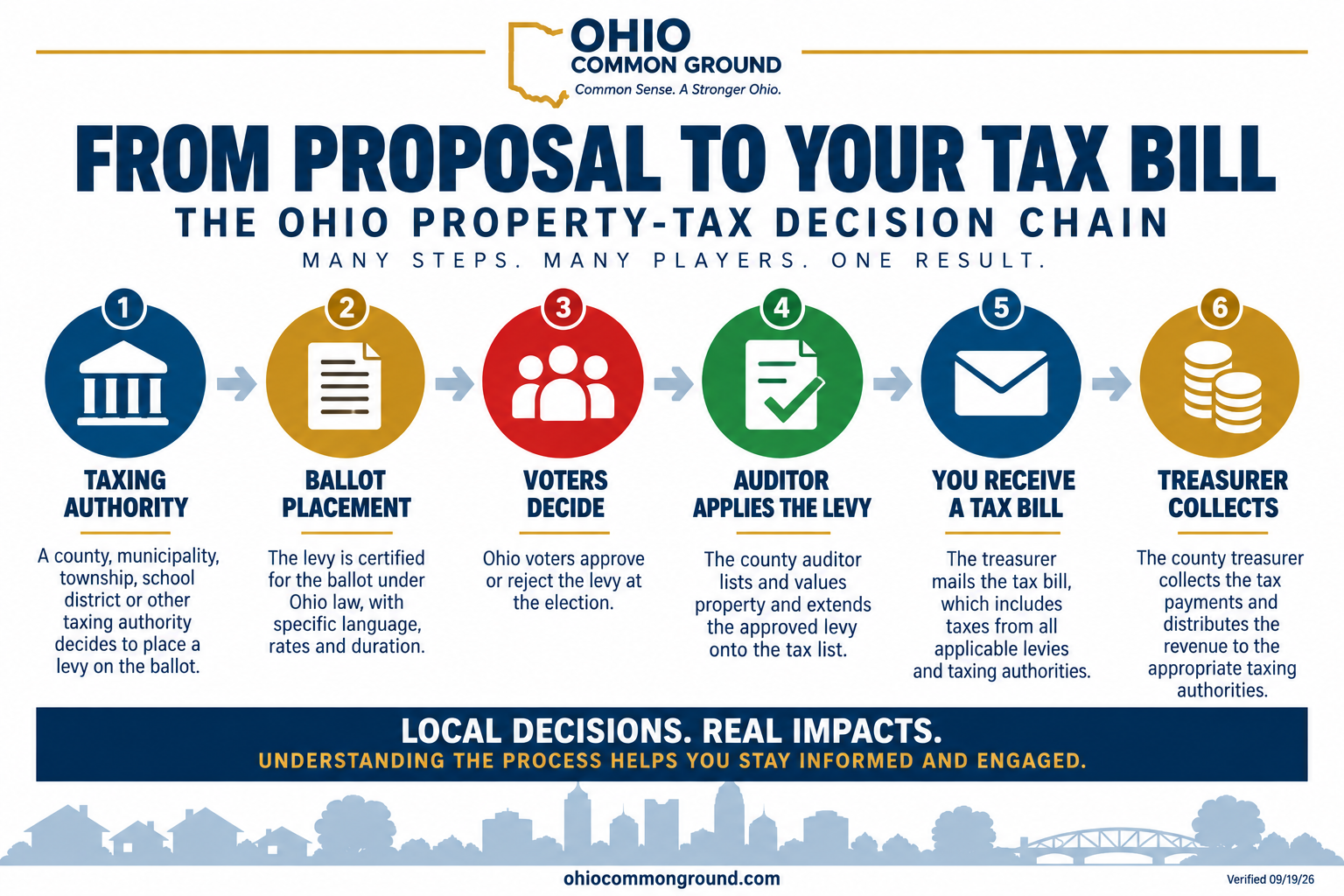
From Proposal to Your Tax Bill: The Ohio Property-Tax Decision Chain
The path from a levy proposal to a property-tax bill involves taxing authorities, statutory ballot procedures, voters, the county auditor and county treasurer.
View Visual →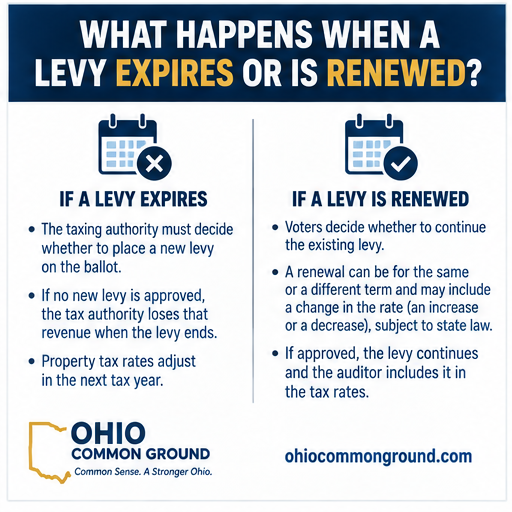
What Happens When a Levy Expires or Is Renewed?
Ohio law distinguishes renewal, renewal with an increase or decrease, reduction/decrease and other levy actions. General replacement-levy authority was repealed effective January 1, 2026.
View Visual →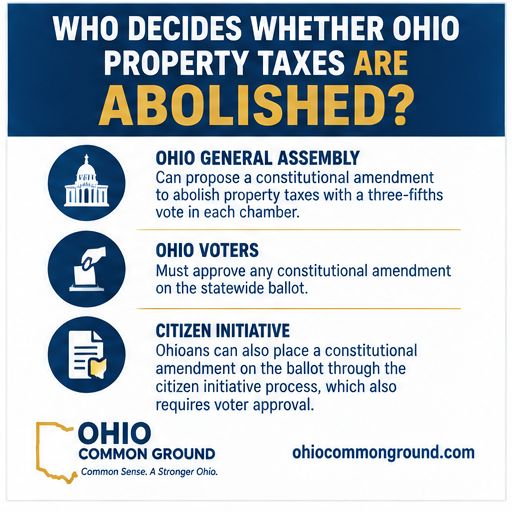
Who Decides Whether Ohio Property Taxes Are Abolished?
A statewide constitutional change can reach voters through a General Assembly proposal approved by three-fifths of each chamber or through Ohio's citizen-initiative process. Constitutional amendments ultimately require voter approval.
View Visual →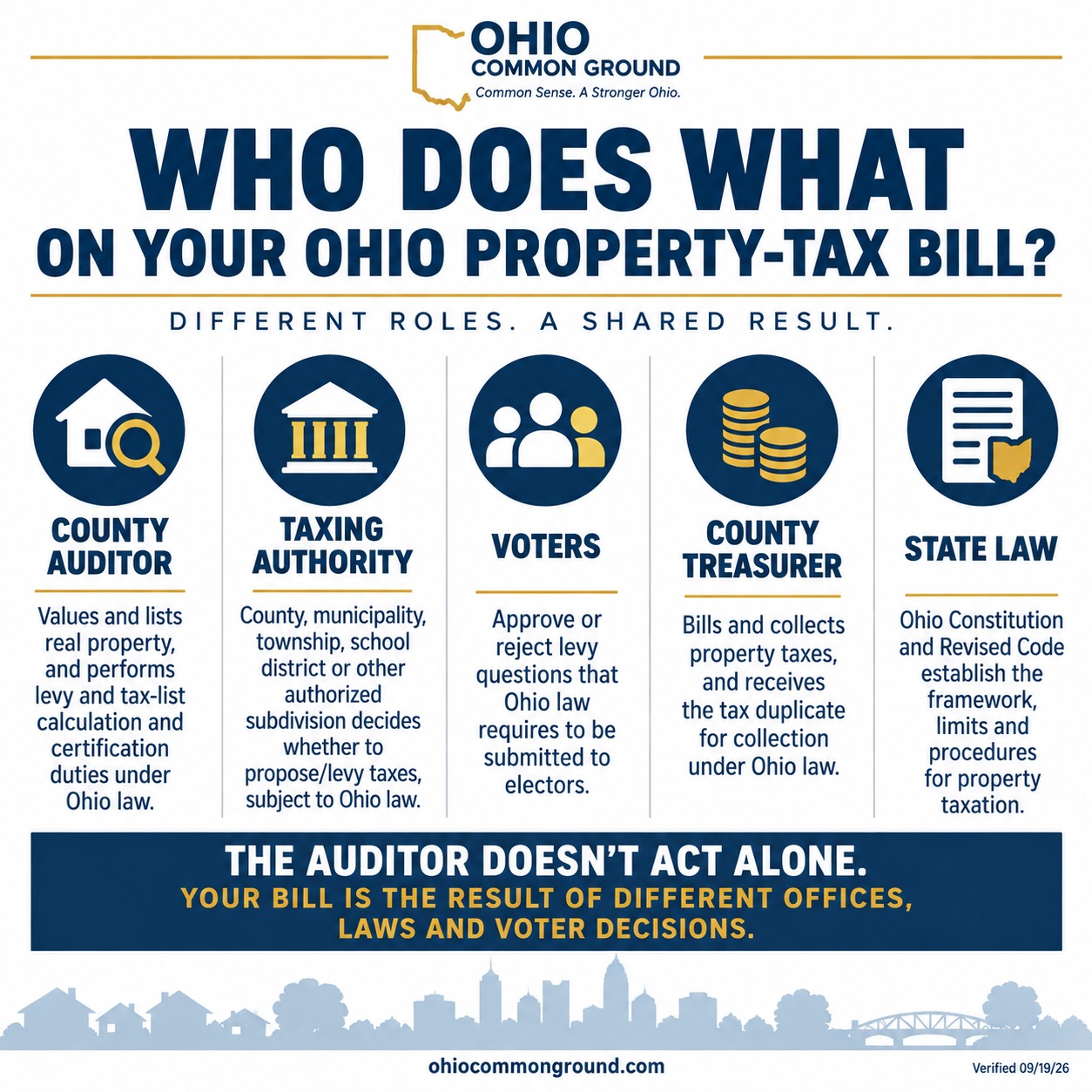
Who Does What on Your Ohio Property-Tax Bill?
Different offices and decision-makers perform different parts of Ohio's property-tax system: auditors value and list property, taxing authorities act under statutory levy authority, voters decide levy questions sent to the ballot, and treasurers collect taxes.
View Visual →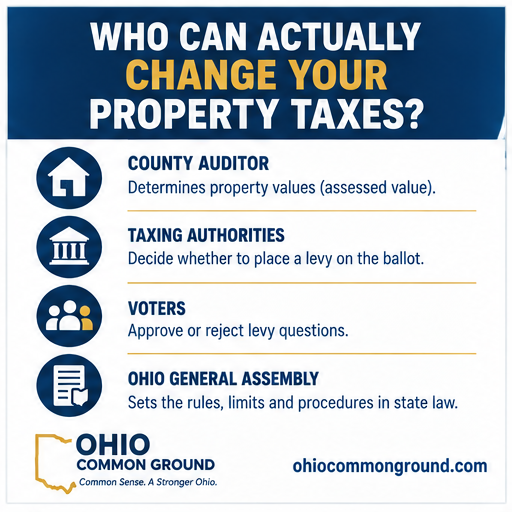
Who Can Actually Change Your Property Taxes?
Property values, levy decisions, voter approval, statewide rules and tax collection are controlled by different actors under Ohio law.
View Visual →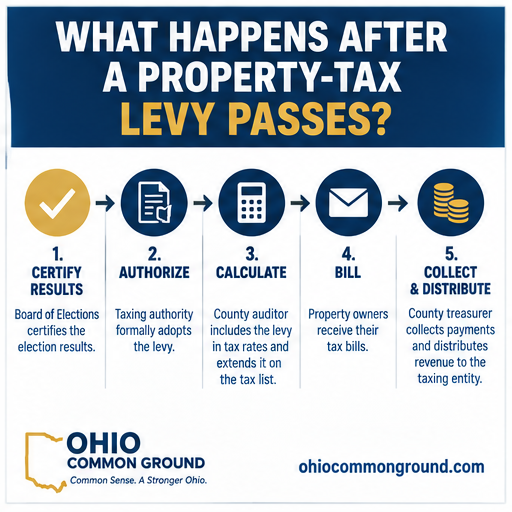
What Happens After a Property-Tax Levy Passes?
A voter-approved levy moves through certification, levy implementation, tax-list calculation, billing and collection before revenue reaches the taxing authority.
View Visual →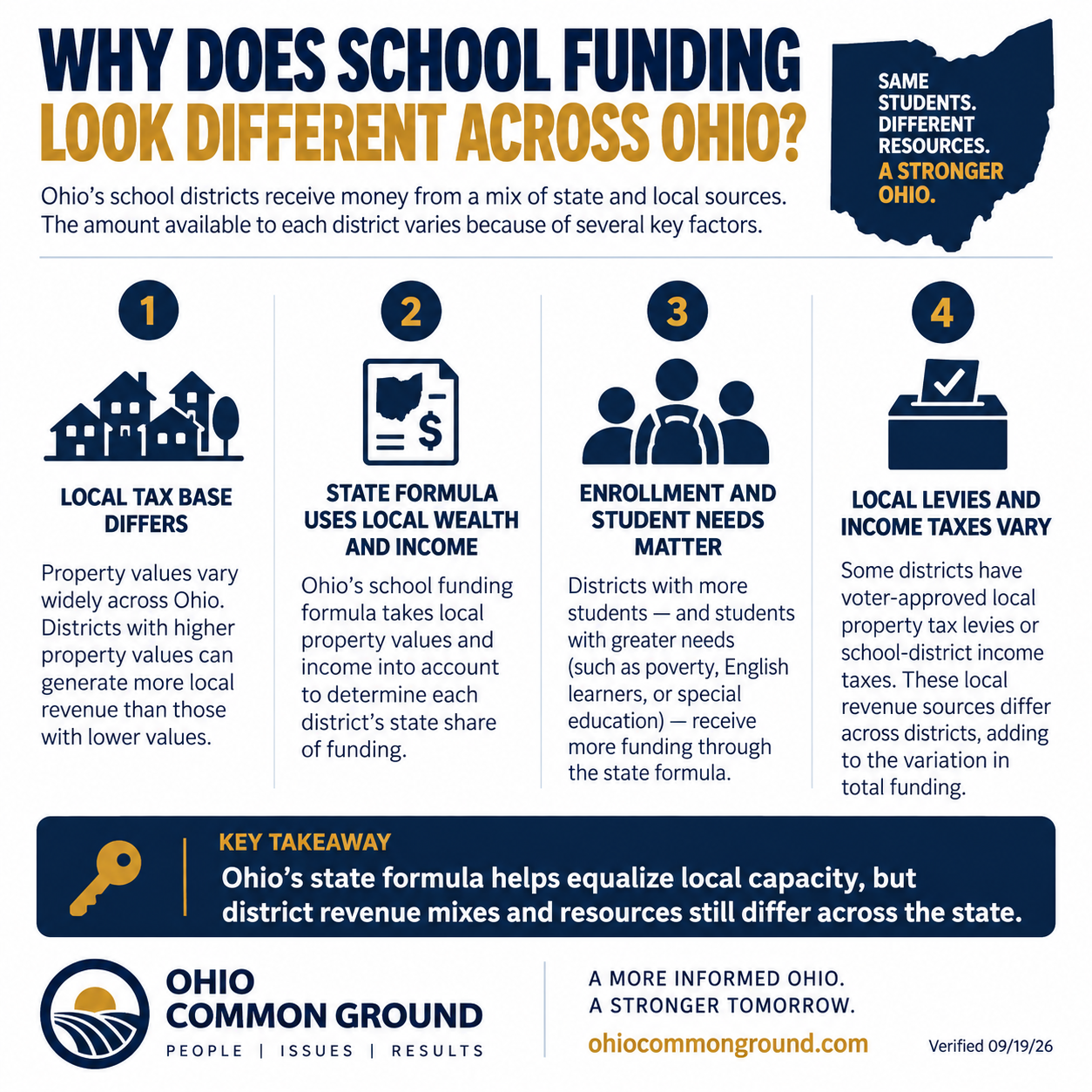
Why Does School Funding Look Different Across Ohio?
District tax bases, state formula inputs, enrollment and student needs, and locally approved taxes all contribute to differences in school funding across Ohio.
View Visual →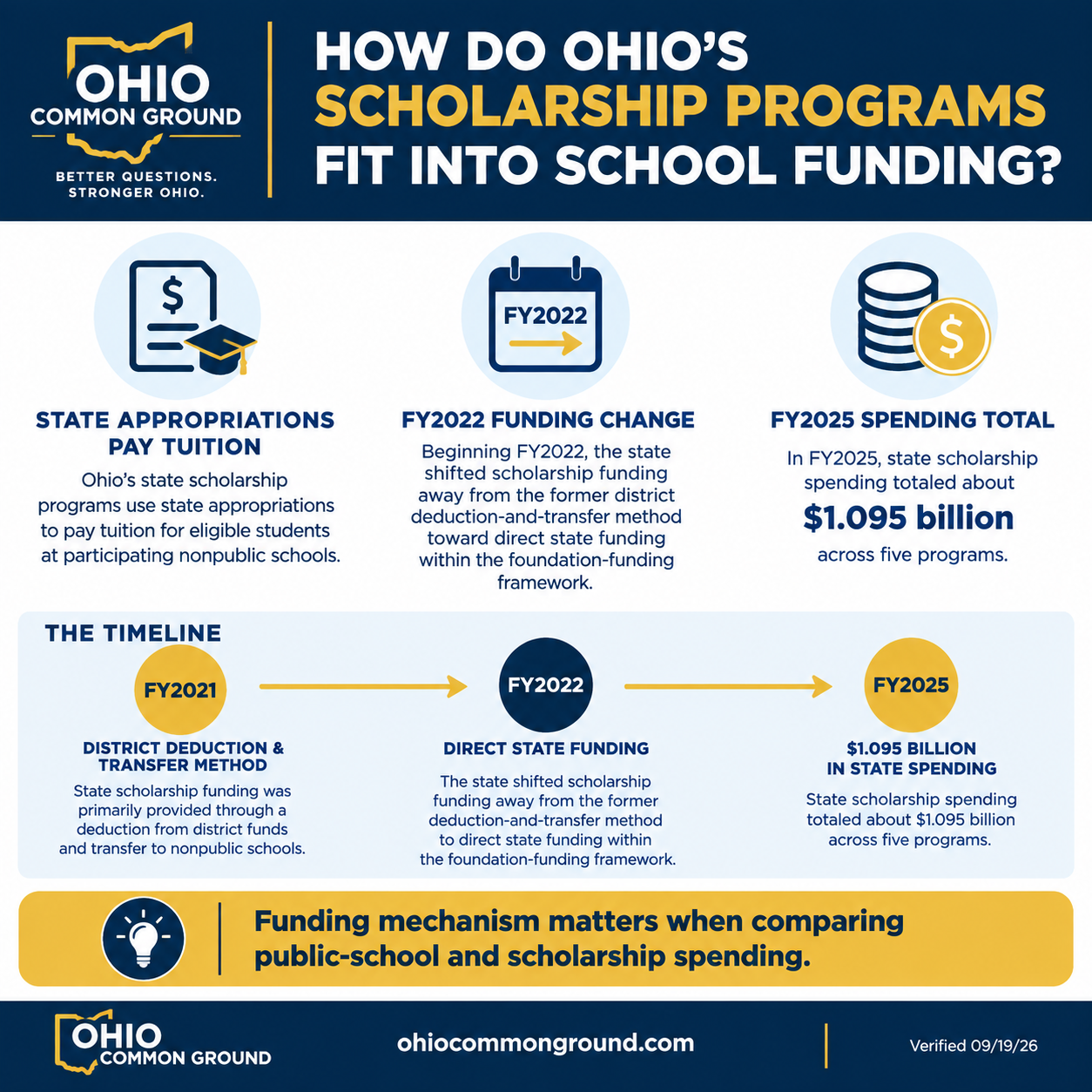
How Do Ohio's Scholarship Programs Fit Into School Funding?
Ohio's state scholarship programs use state appropriations to pay tuition for eligible students at participating nonpublic schools. Beginning in FY2022, scholarship funding shifted away from the former district deduction-and-transfer model toward direct state funding.
View Visual →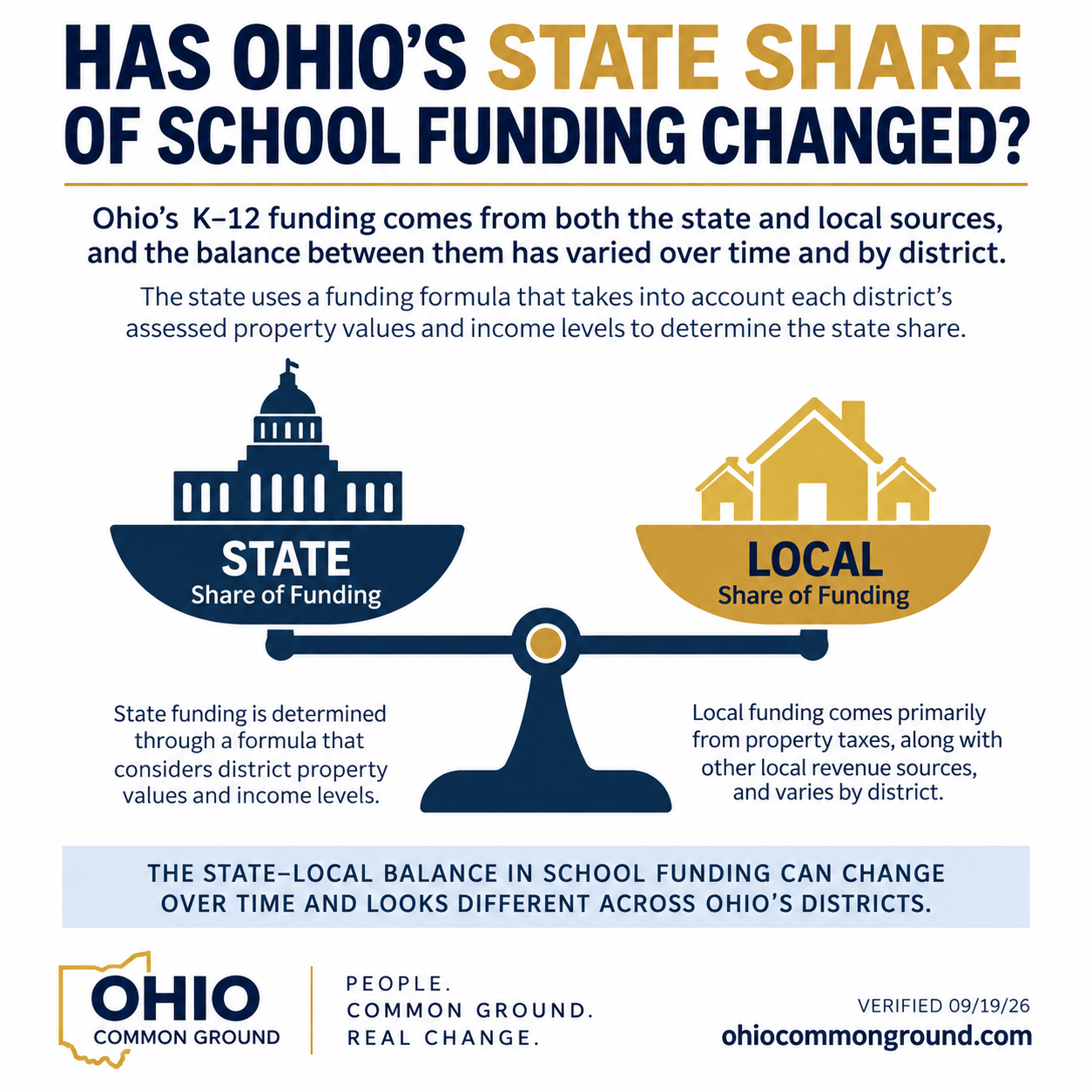
Has Ohio's State Share of School Funding Changed?
Ohio school funding combines state and local sources, and the balance varies across districts and over time. The current formula uses local property values and income to help determine the state share.
View Visual →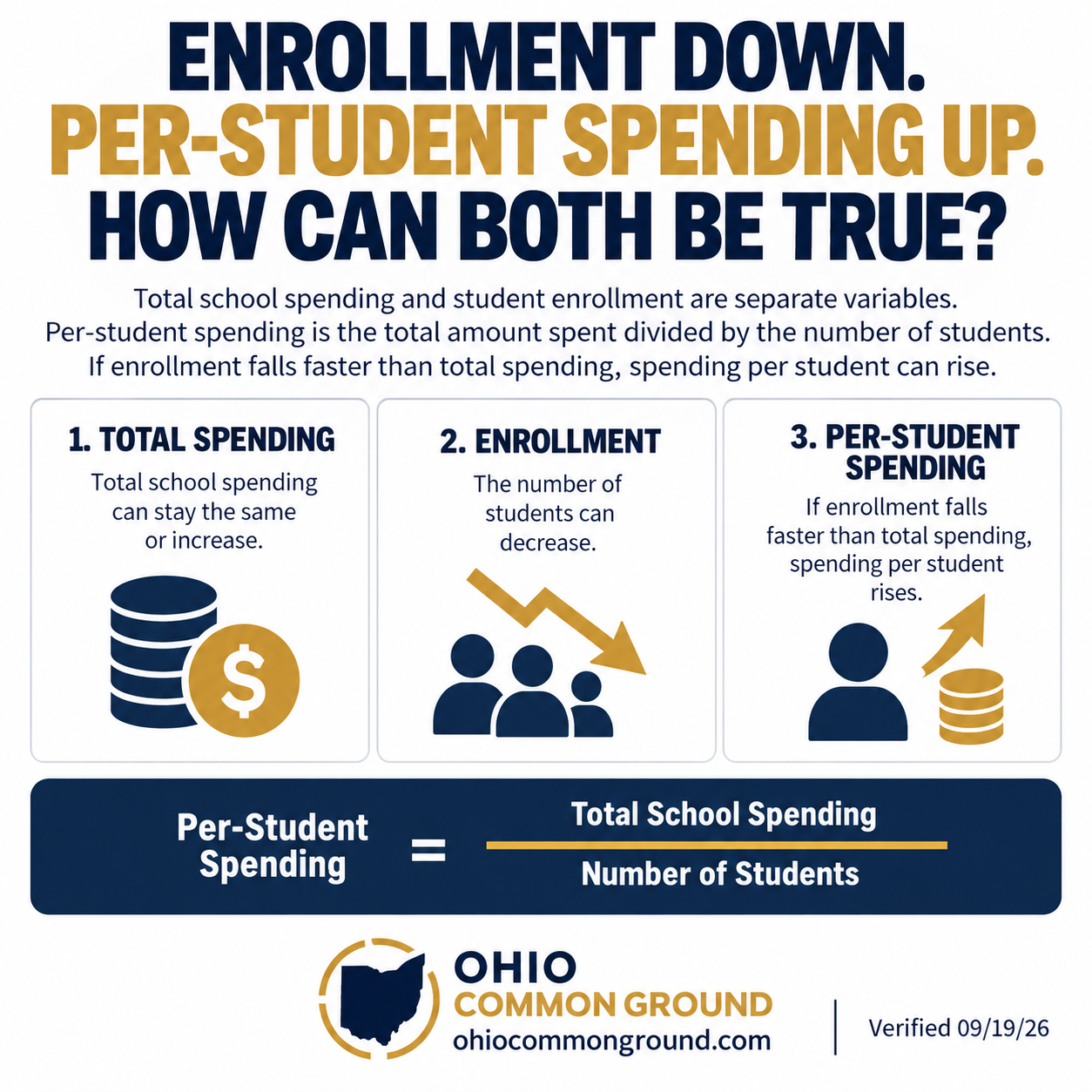
Enrollment Down, Spending Per Student Up: How Can Both Be True?
Per-student spending is a ratio. If enrollment falls faster than total spending, spending per student can rise even when total spending changes much less.
View Visual →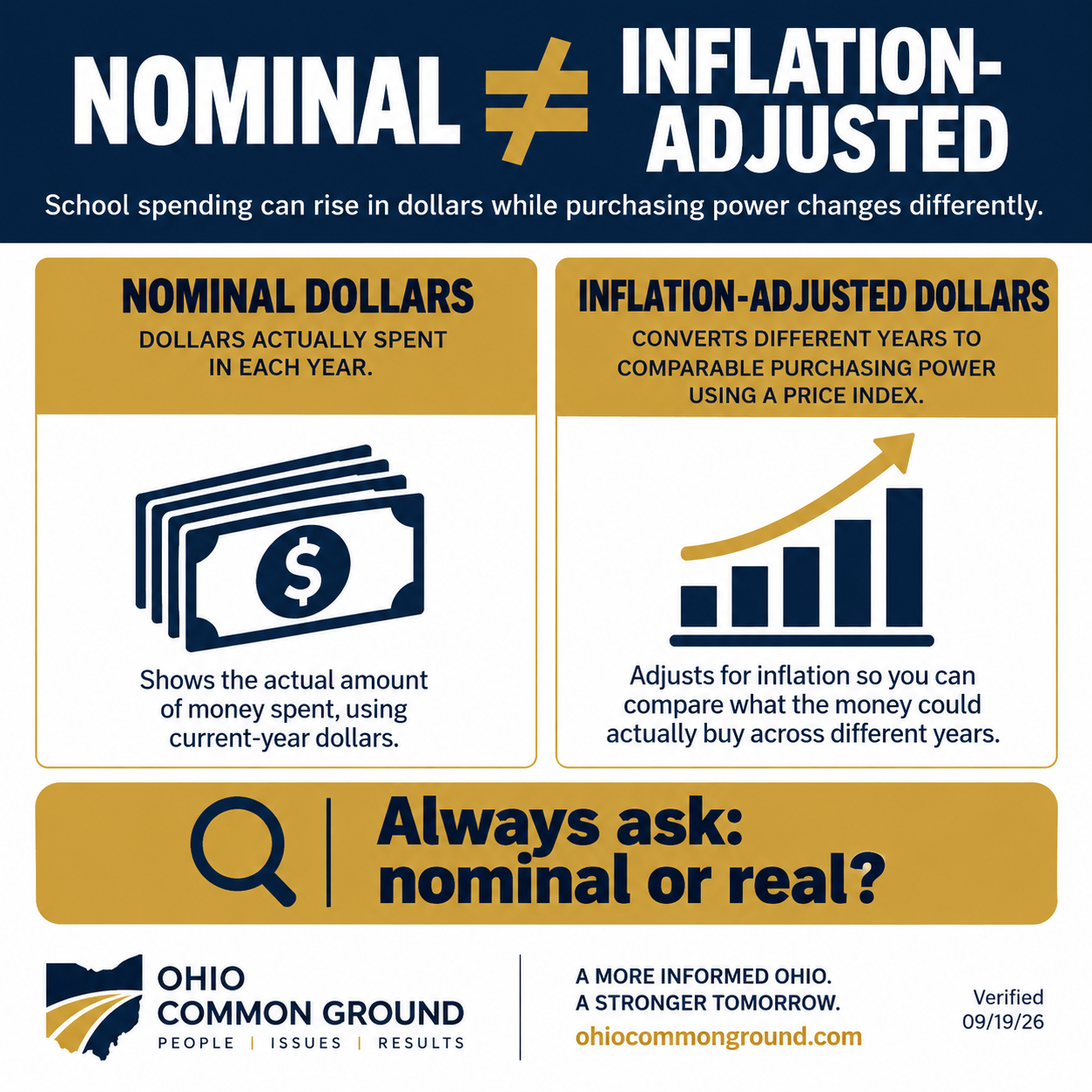
Nominal School Spending Is Not the Same as Inflation-Adjusted Spending
Nominal spending reports the dollars actually spent in each year; inflation-adjusted spending converts different years into comparable purchasing-power terms.
View Visual →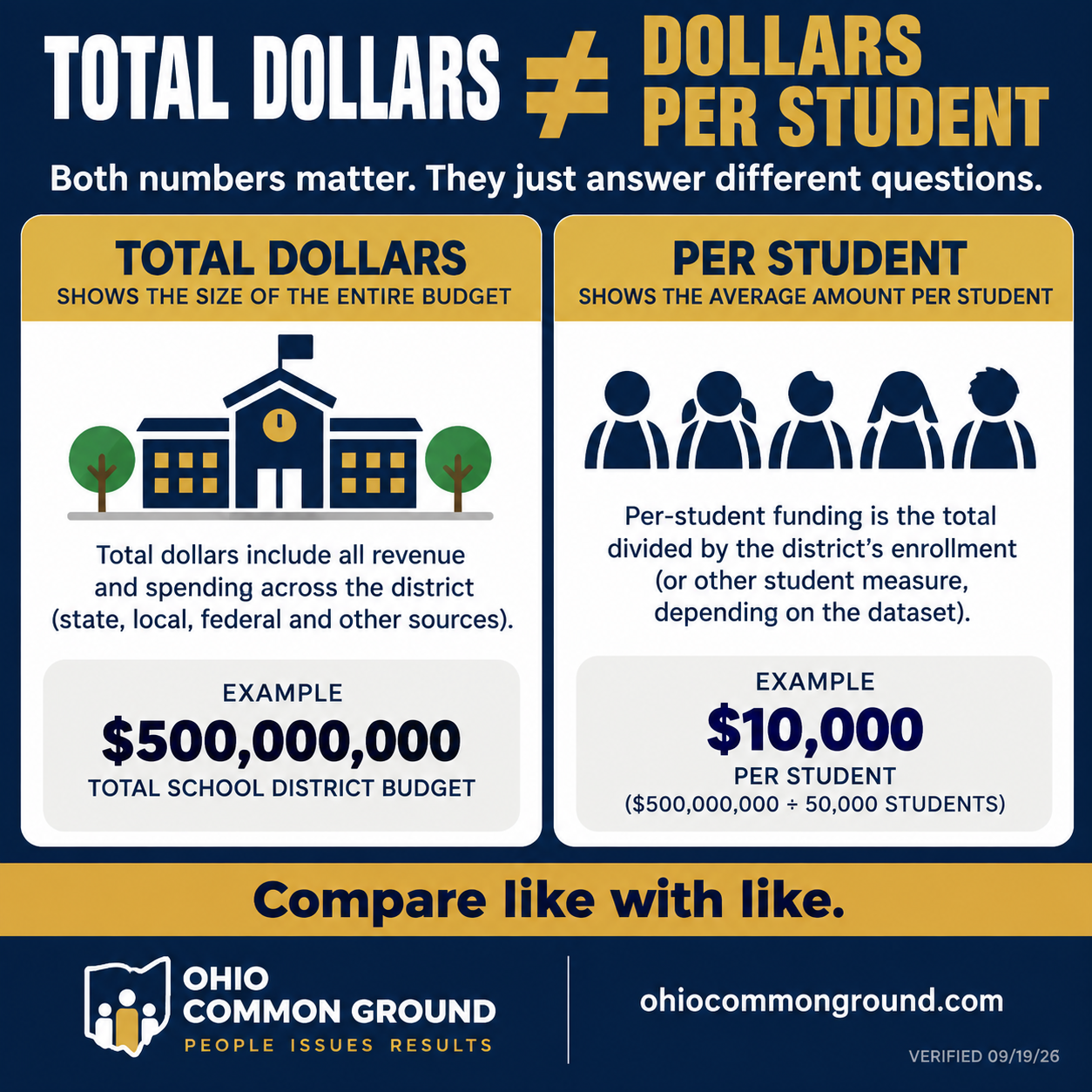
Total School Funding Is Not the Same as Funding Per Student
Total dollars describe the size of a school system's overall budget; per-student figures divide a total by an enrollment or student-count measure.
View Visual →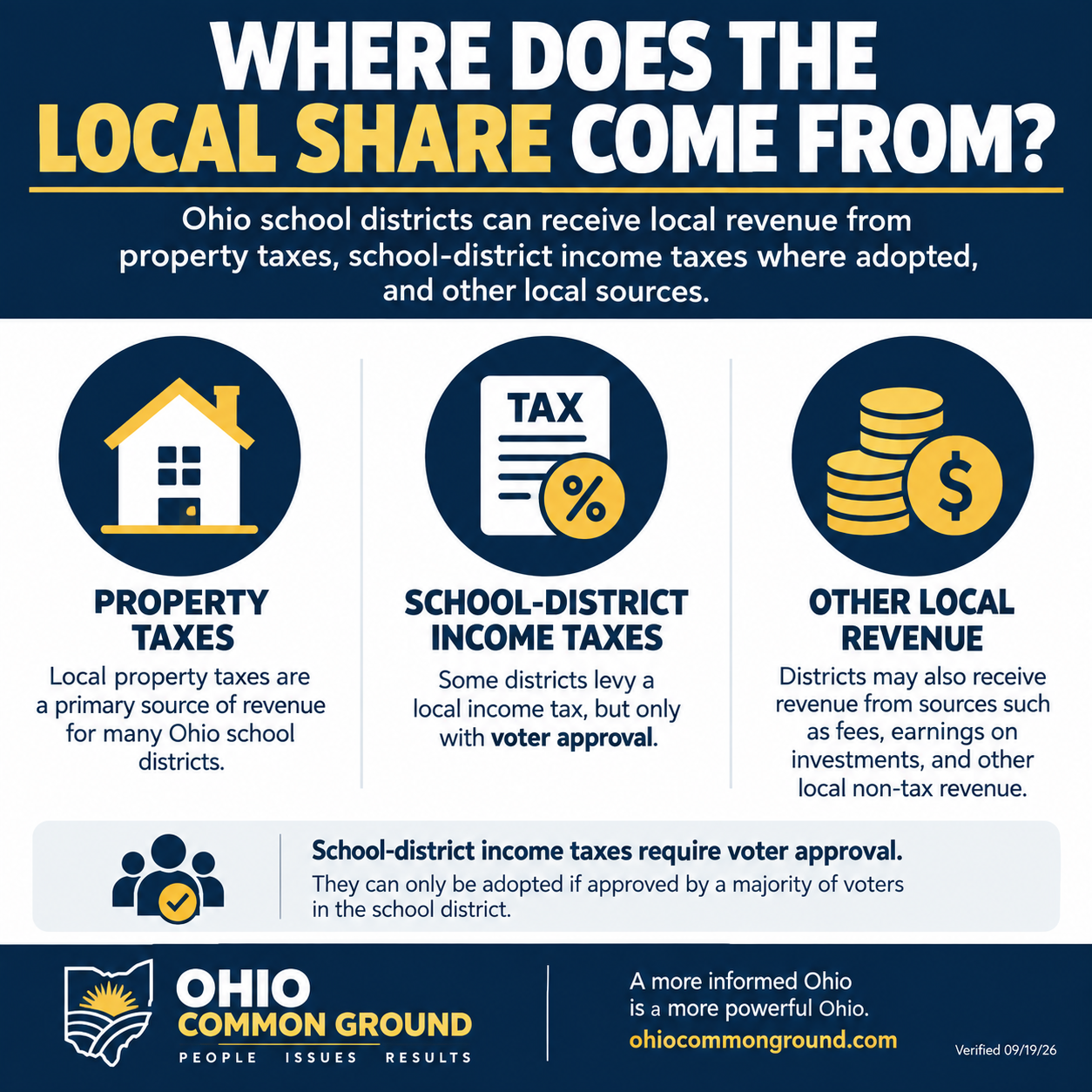
Where Does the Local Share of Ohio School Funding Come From?
Local school revenue comes primarily from property taxes, with school-district income taxes used in some districts and additional local non-tax revenue also contributing.
View Visual →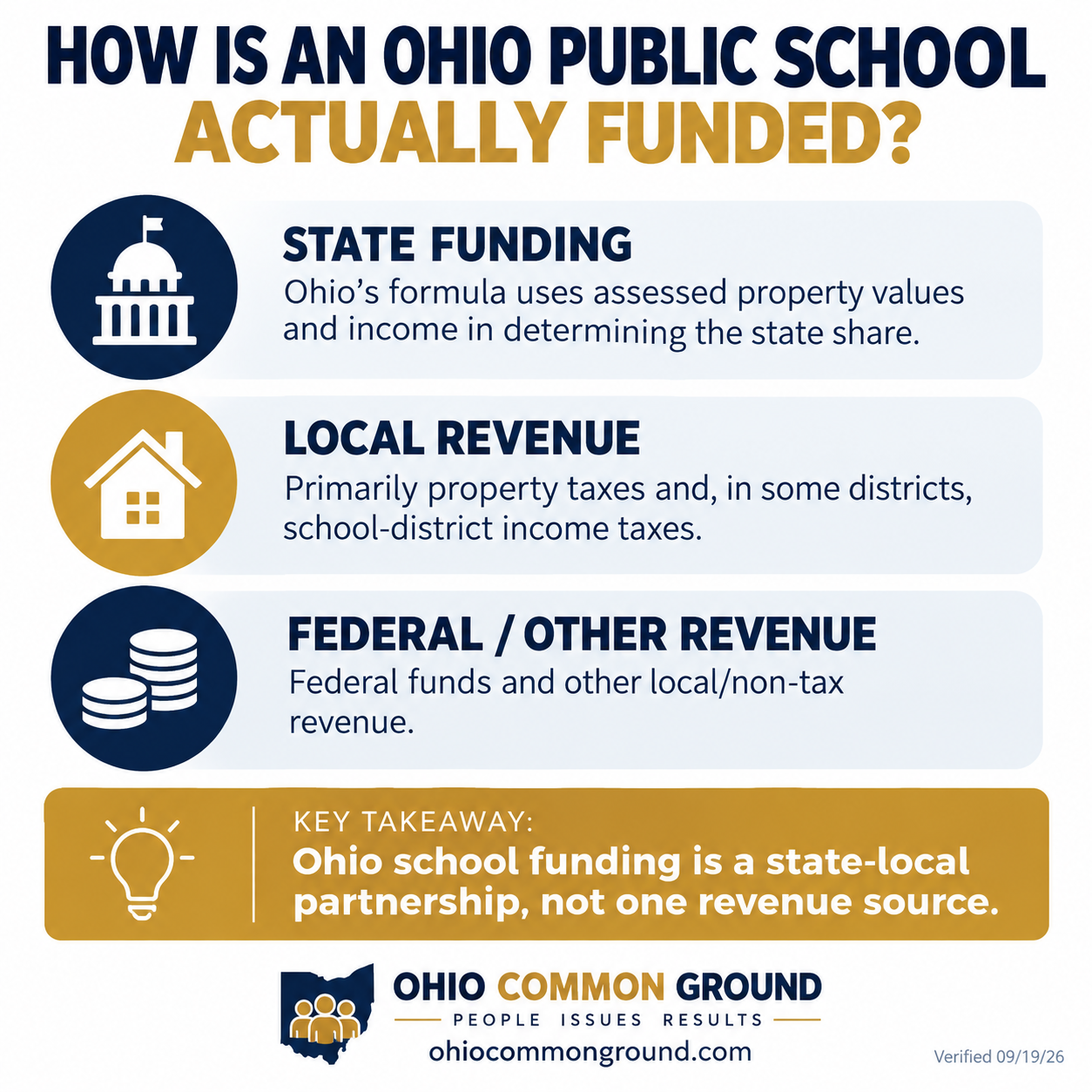
How Is an Ohio Public School Actually Funded?
Ohio public school districts use state funding, local revenue and federal or other revenue. The state formula uses local property values and income when determining the state share.
View Visual →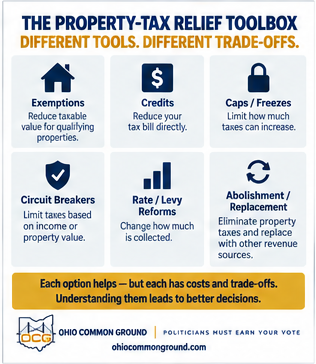
The Property-Tax Relief Toolbox: Different Tools, Different Trade-Offs
Property-tax reform can use exemptions, credits, caps, circuit breakers, levy changes or replacement revenue, and each tool changes different parts of the system.
View Visual →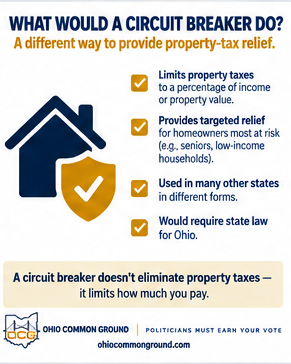
What Would a Property-Tax Circuit Breaker Do?
A circuit breaker is a policy design that limits qualifying property-tax burdens using an income- or tax-burden threshold; it is a reform concept, not a description of Ohio's current statewide system.
View Visual →
What Can an Ohio Property Owner Challenge?
Ohio provides a process to challenge property valuation or assessment, but changing a tax rate or levy is a different legal and political process.
View Visual →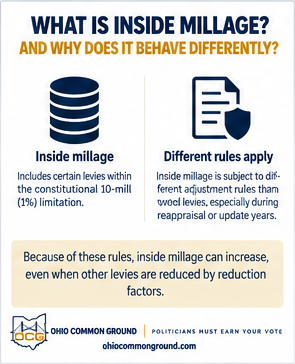
What Is Inside Millage—and Why Does It Behave Differently?
Inside millage refers to property taxes levied within Ohio's ten-mill limitation and is governed differently from many voted levies.
View Visual →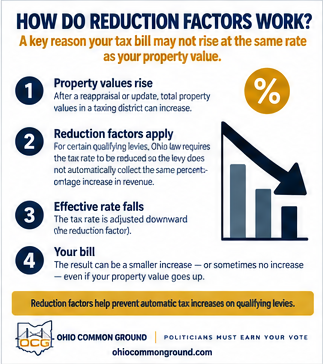
How Do Ohio Tax Reduction Factors Work?
Ohio's tax-reduction-factor system can lower effective rates on qualifying levies when carryover property values rise.
View Visual →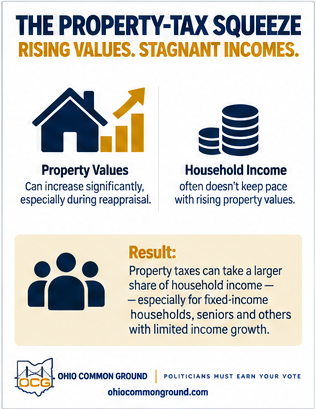
The Property-Tax Squeeze: Value, Income and Ability to Pay
Property values and household cash income can move differently, creating affordability pressure for some property owners even when their wealth on paper rises.
View Visual →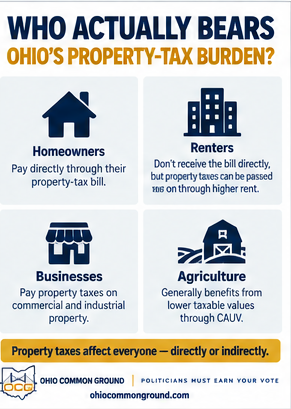
Who Actually Bears Ohio's Property-Tax Burden?
Property taxes are billed to property owners, while the economic burden can also affect renters, businesses and agricultural operations in different ways.
View Visual →
Ohio's Homestead Exemption: Who Qualifies and What Does It Do?
Ohio's homestead provisions reduce property taxes for qualifying homeowners, including certain older or disabled owners and specified survivors.
View Visual →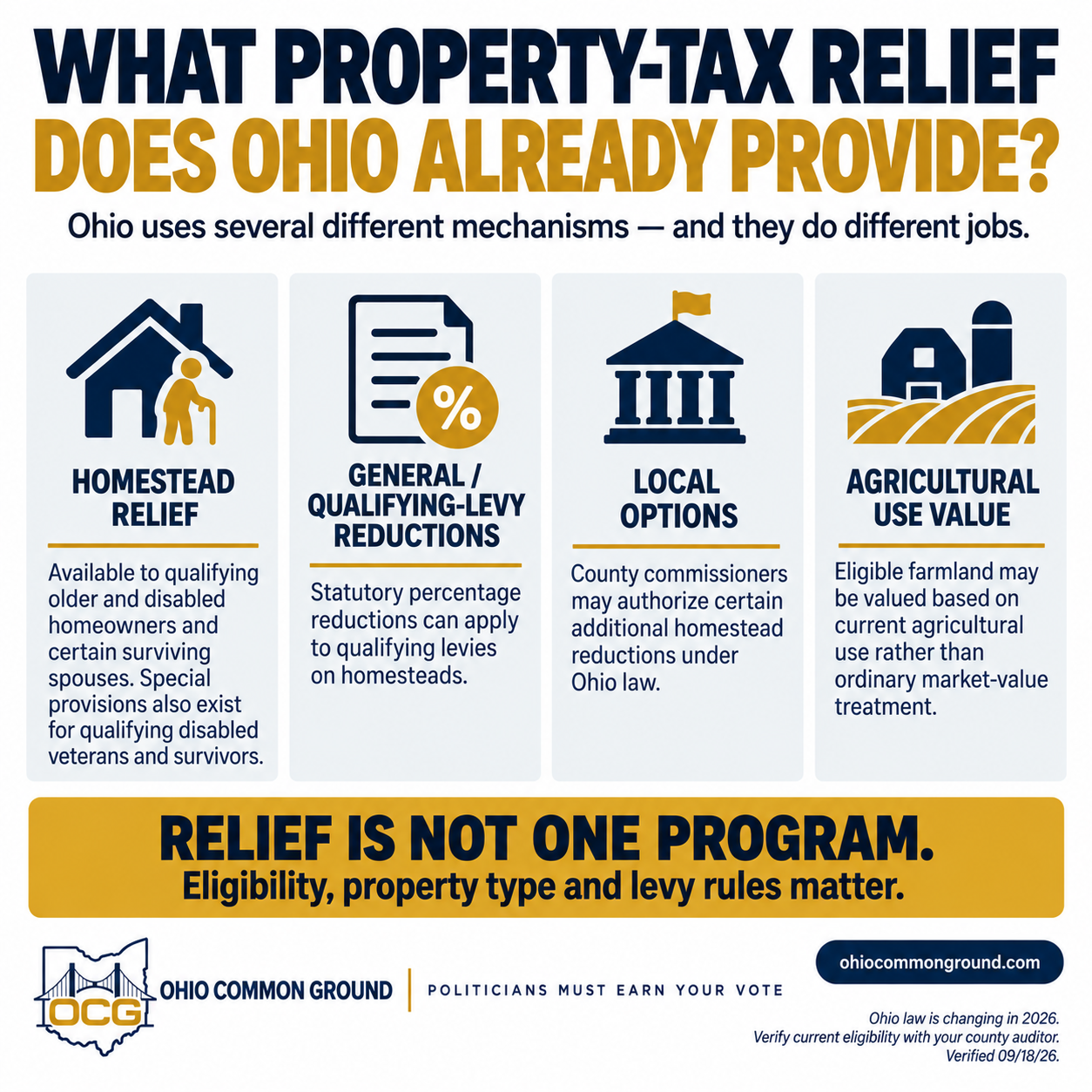
What Property-Tax Relief Does Ohio Already Provide?
Ohio property-tax relief is a collection of different mechanisms with different eligibility rules, rather than one single program.
View Visual →
Your Home Value Rose 30%. Do Your Property Taxes Rise 30%?
An Ohio reappraisal can substantially increase a home's market value without producing the same percentage increase in its property-tax bill.
View Visual →
What Questions Should Ohio Answer Before Abolishing Property Taxes?
A neutral checklist of the fiscal, legal and distributional questions that remain after deciding to eliminate the tax itself.
View Visual →
What Happens If Ohio Abolishes Property Taxes?
The direct consequence is the loss of a major local revenue source; the ultimate effects depend on replacement and transition decisions made afterward.
View Visual →
What Is a Levy—and What Does My Vote Actually Change?
A levy vote authorizes a defined tax structure, purpose and duration; the millage number alone does not tell the whole story.
View Visual →
Why Can My Property-Tax Bill Go Up?
Reappraisal, levy structure and other changes can affect a bill differently; appraisal growth is not automatically bill growth at the same percentage.
View Visual →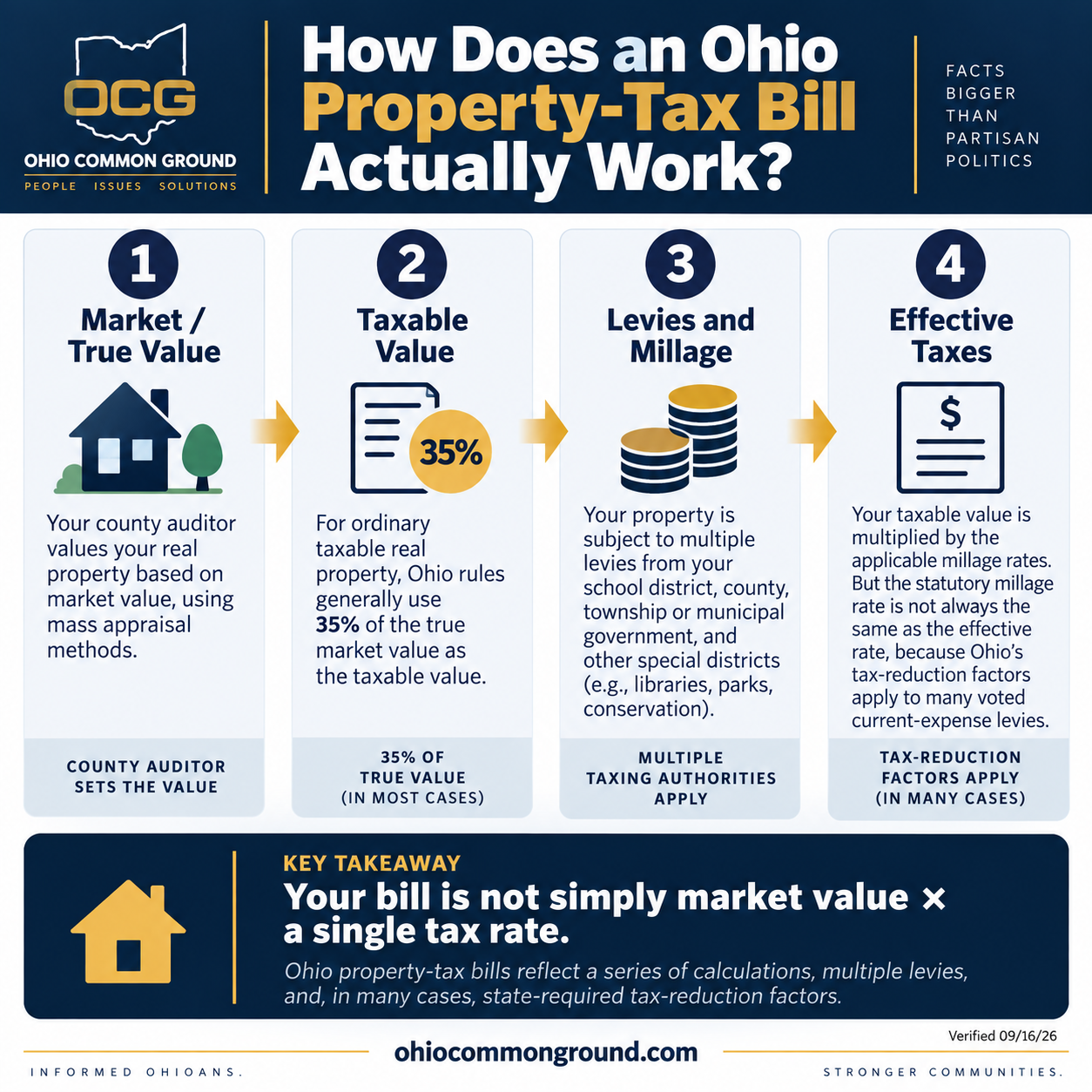
How Does an Ohio Property-Tax Bill Actually Work?
Follow the calculation from market value to taxable value, overlapping levies and effective taxes.
View Visual →
What Does the Current Abolishment Proposal Actually Do?
The circulating constitutional amendment would prohibit taxes on real property; it does not itself create a replacement funding system.
View Visual →
Income Tax Replacement: The Scale
OCG research cites an estimate illustrating the scale of an income-tax replacement.
View Visual →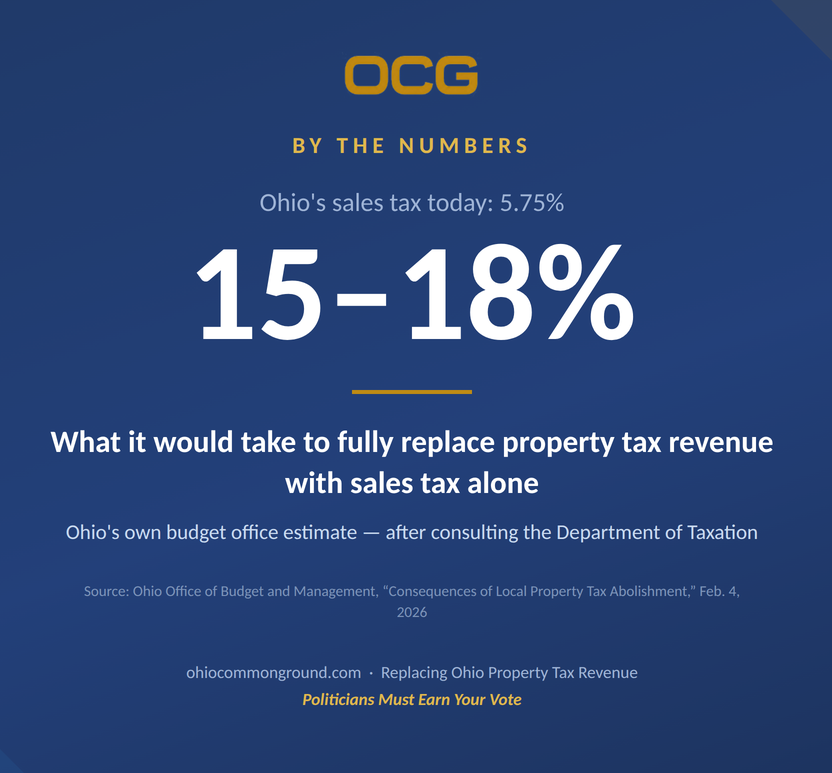
Sales Tax Replacement: The Scale
OCG research cites an OBM estimate illustrating the scale of a sales-tax replacement.
View Visual →
What Could Replace Ohio Property-Tax Revenue?
Eliminating a tax base above $21 billion requires some combination of new revenue, spending reductions, retained taxes or structural change.
View Visual →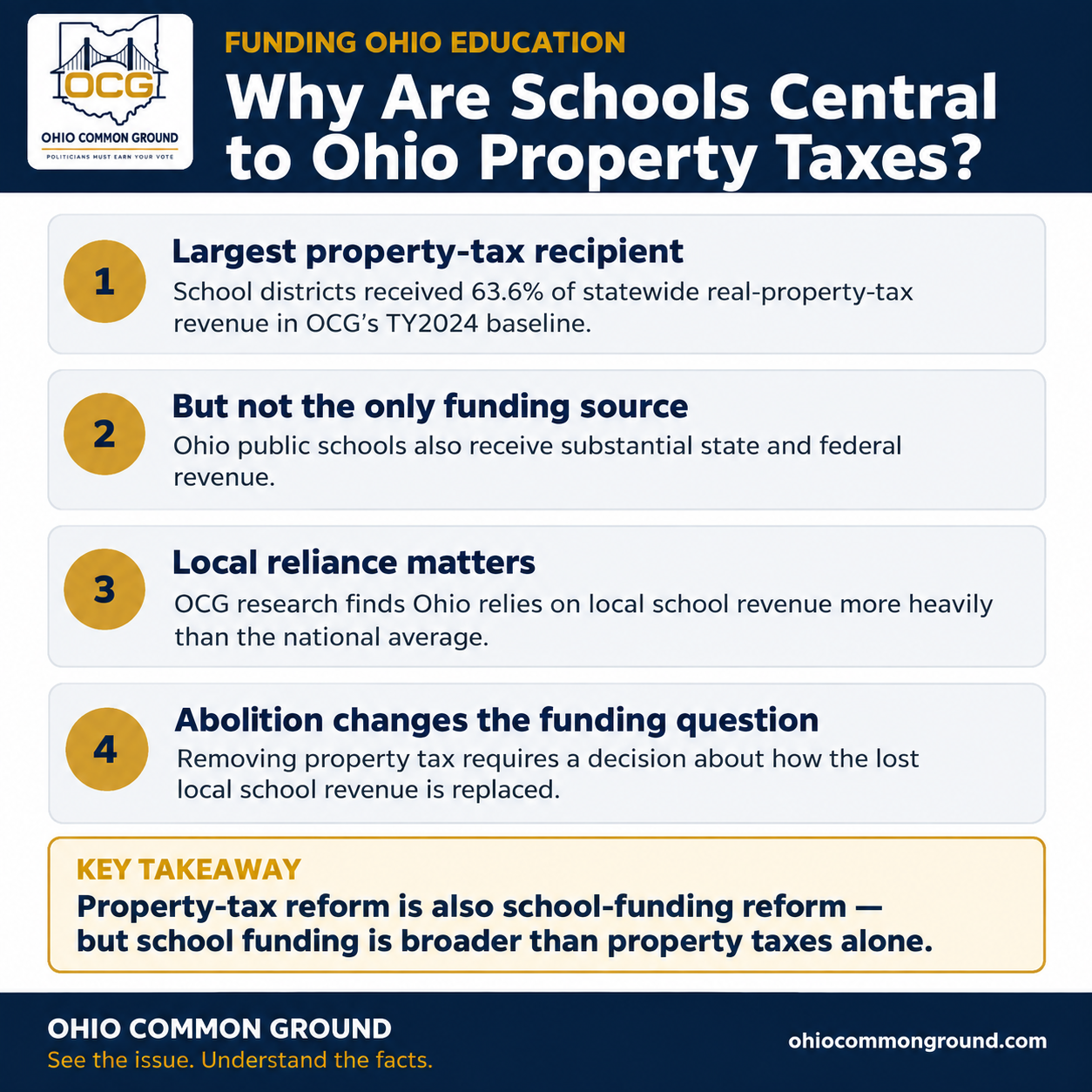
Why Are Schools Central to Ohio Property Taxes?
School districts receive the largest share of Ohio property-tax revenue, making school funding inseparable from the debate.
View Visual →
Where Do Ohio Property-Tax Dollars Go?
OCG's TY2024 baseline shows school districts receiving nearly two-thirds of Ohio real-property-tax revenue.
View Visual →
Who Can Levy Property Taxes in Ohio?
Ohio local governments do not all have the same taxing powers, which matters if property-tax revenue is reduced or eliminated.
View Visual →
What Is a Property Tax?
Start with the basic concept: an Ohio property-tax bill combines taxable property value with taxes levied by overlapping local governments and districts.
View Visual →LONG-FORM RESEARCH
Research Papers
Go beyond the visuals with the full OCG research behind this topic.

Explore the Research Center
Visuals are the starting point. Explore the research, sources and context behind this issue through the Ohio Common Ground Research Center.
Explore OCG Research